Short answer: The Eureka Oro Mignon Single Dose Pro is the best espresso grinder under $1,000 for home espresso: 65 mm burrs, stepless adjustment and a 45 g bellows hopper for low retention at $819–$869 (Nov 2026 prices). Pick the Baratza Forte AP to grind by weight to within 0.1 g, or the Baratza Sette 270Wi to grind by weight straight into your portafilter for $599.95.
Under $1,000 you can get a grinder that pulls genuinely good espresso, holds its setting and keeps waste low. That covers a lot of strong home and light-commercial grinders. Below are our favorite espresso grinders under $1,000, picked from this collection on burr size, dosing method and how finely each one adjusts for espresso.
What is the best espresso grinder under $1,000?
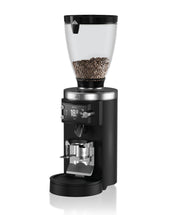
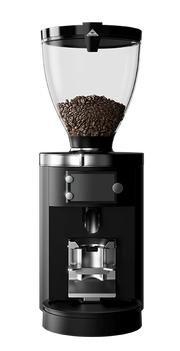
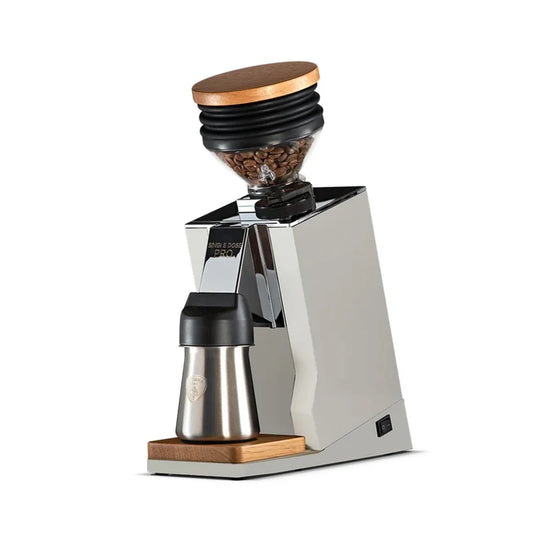
The Eureka Oro Mignon Single Dose Pro is our top pick for espresso at home. Eureka built it for single dosing: 65 mm espresso-focused burrs, a revised blind upper burr and a canted case give a shorter grind path and minimal retention. A 45 g hopper with bellows pushes out the last grounds, and a large adjustment knob with a rotation indicator makes stepless dial-in easier. It runs on 120V, is 5.5 inches wide and 14.25 inches tall, and costs $819 in black or white and $869 in silver (Nov 2026 prices).
Best for
Home baristas who weigh every dose and switch coffees often.
Skip it if
You want programmed doses; the Single Dose Pro has no programming and all dosing is manual.
Which grinder under $1,000 grinds by weight?
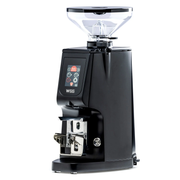
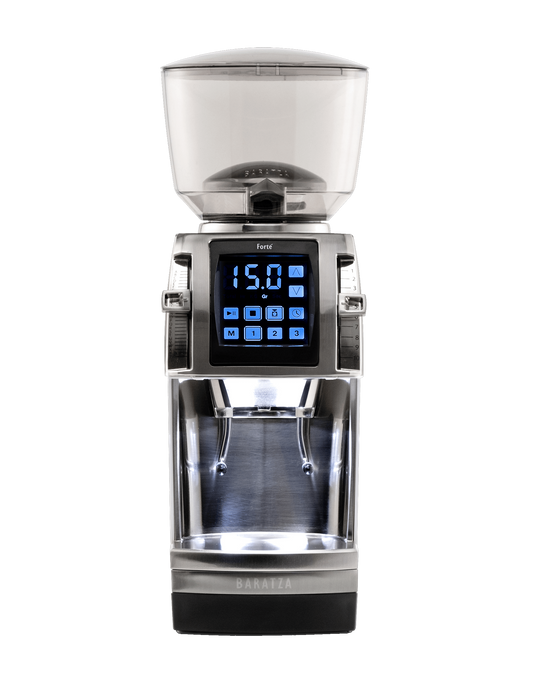
The Baratza Forte AP grinds by weight or by time and weighs to within plus or minus 0.1 g while grinding at 2.1 g per second for espresso. It has 54 mm ceramic flat burrs, an LCD touchscreen with three programmable buttons, macro and micro adjustment, an all-metal grinding chamber and a heavy-duty portafilter holder. Its 10 oz hopper has a bean shut-off so you can lift it off with beans inside. The Forte AP costs $849.95 (Nov 2026 price).
Best for
Home baristas, offices and light-commercial bars that want exact, repeatable doses with no separate scale.
Skip it if
You single dose a few grams at a time; a bellows grinder like the Eureka Oro Mignon suits that workflow.
What is the best grind-by-weight espresso grinder for the money?
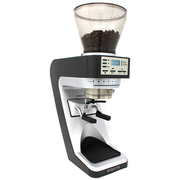
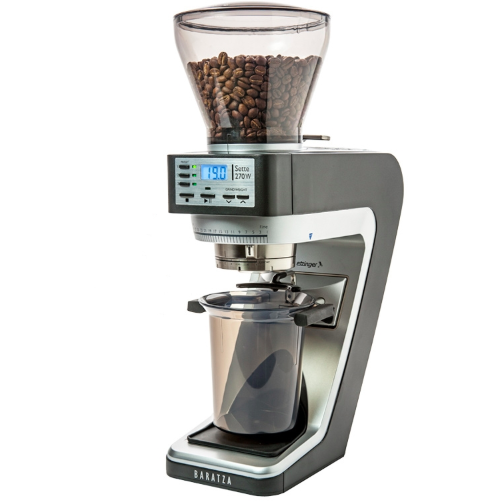
The Baratza Sette 270Wi has a built-in Acaia scale and grinds by weight directly into your portafilter, the grounds bin or a brewer such as an AeroPress. Its software predicts the stop point when you change grind setting, beans or dose weight, so you never adjust an offset. The 40 mm steel conical burrs grind about 3.5 g per second, with 30 macro steps and a stepless micro adjustment. It weighs 7 lbs, is 5 inches wide and costs $599.95 (Nov 2026 price).
Best for
Home espresso drinkers who want weight-based dosing on a small counter.
Skip it if
You want flat burrs or a quiet hopper-fed grinder for a café line.
Which grinder under $1,000 is built like a café grinder?
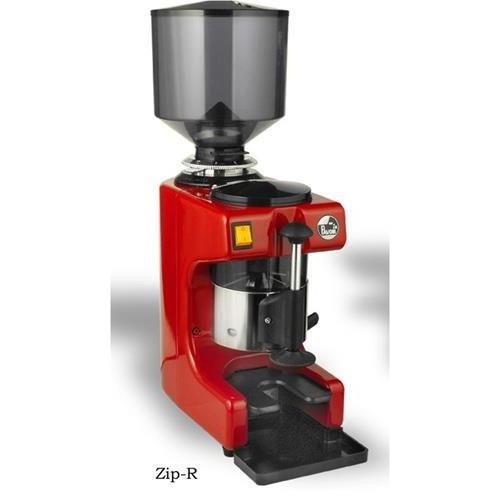
The La Pavoni ZIP is a die-cast aluminum doser grinder with 65.5 mm tempered steel flat burrs, a 2.2 lb hopper and an output of 13 lbs per hour. The dose adjusts from 5 to 8 g, and a safety device stops the motor. It runs on 120V at 1,400 RPM, weighs 29 lbs and is made in Italy. The ZIP costs $940 in Ruby Red or Gold Black (Nov 2026 price).
Best for
Small cafés, restaurants and home bars that pull many shots in a row from one blend.
Skip it if
You pull one or two shots a day; ground coffee waiting in a doser goes stale.
Are the Baratza Vario+ and Vario-W+ good for espresso?
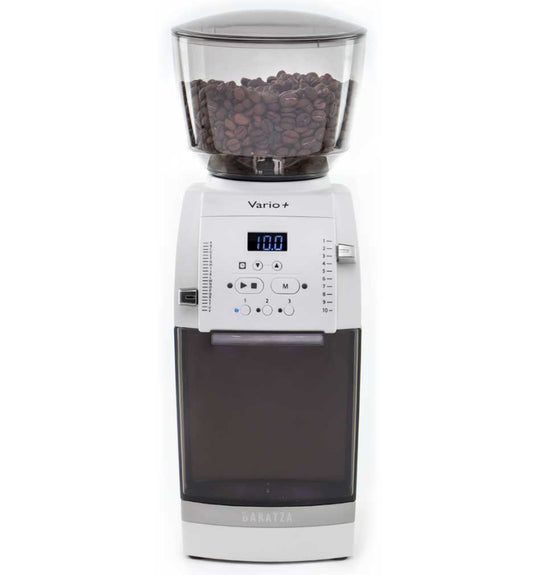
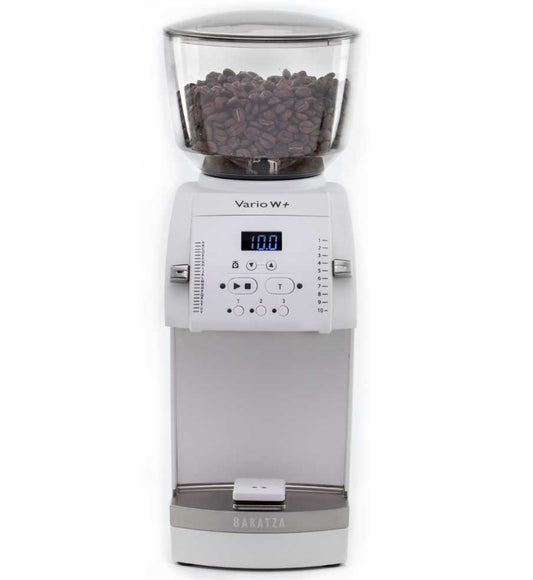
The Baratza Vario+ ($529.95) and Baratza Vario-W+ ($599.95, Nov 2026 prices) grind from espresso to French press with 54 mm flat burrs and 220 macro and micro grind settings. The Vario+ uses ceramic burrs and a digital timer; the Vario-W+ uses steel burrs and doses by weight. Both have an all-metal burr chamber, LED barista lights and a low profile that fits under most kitchen cabinets.
Best for
Homes that brew espresso and filter coffee from one grinder.
Skip it if
You only make espresso and want the finest adjustment; the Eureka Oro Mignon is stepless.
How do the espresso grinders under $1,000 compare?
| Grinder |
Burrs |
Dosing |
Price (Nov 2026) |
| Eureka Oro Mignon Single Dose Pro |
65 mm |
Manual single dose |
$819–$869 |
| Baratza Forte AP |
54 mm ceramic flat |
Weight or time, 3 buttons |
$849.95 |
| Baratza Sette 270Wi |
40 mm steel conical |
Weight, into portafilter |
$599.95 |
| La Pavoni ZIP |
65.5 mm steel flat |
Doser, 5–8 g |
$940 |
| Baratza Vario-W+ |
54 mm steel flat |
Weight |
$599.95 |
| Baratza Vario+ |
54 mm ceramic flat |
Timer |
$529.95 |
The Baratza Forte BG in this collection is a brew grinder with 54 mm steel burrs for medium to coarse grinds such as pour over and French press. It is not an espresso grinder.
Is a single-dose grinder better for espresso?
A single-dose grinder like the Eureka Oro Mignon Single Dose Pro is better if you change beans often, because you grind only what you weigh and little coffee stays in the grinder. A hopper grinder like the La Pavoni ZIP is faster when you pull many shots of one blend. See our best low and zero retention coffee grinders guide for more single-dose options.
Flat or conical burrs: which is better for espresso under $1,000?
Both work for espresso. Flat burrs, like the 65 mm burrs in the Eureka Oro Mignon, grind to a more uniform particle size, while the Baratza Sette 270Wi's 40 mm conical burrs are compact and fast. Our conical vs flat burr grinder guide explains the flavor difference.
Should I spend more than $1,000 on an espresso grinder?
Spend more if you serve customers all day. Commercial on-demand grinders with 64–65 mm burrs and programmable doses start in our espresso grinders under $2,000 collection, and our best burr grinders for espresso guide compares home and café grinders side by side. For a lower budget, see our espresso grinders under $500.
Where can I get help choosing an espresso grinder?
Want help matching a grinder to your machine and budget? Call us at (888) 978-5224 to talk to an equipment specialist. Majesty Coffee backs prices with a 90-day price protection guarantee.